
Mole control solutions
How many moles per tunnel?What should be done about the moles?
Are moles wreaking havoc on your garden? Are you tired of waking up to a new set of molehills every morning? We get it, and that’s precisely why we created QuickTaupe. We received countless calls and messages from frustrated customers who were at their wit’s end with mole problems.
Moles are elusive creatures that dig their tunnels discreetly underground, slowly but surely destroying our gardens. Our five-step guide is designed to give you the key method for catching moles and putting an end to the invasion for good.
An effective solution for mole control.


Here’s a crucial fact to understand why you need to tackle a mole problem fast: a single mole can dig over 50 molehills in one season and build a network of tunnels spanning hundreds of meters in just a few days.
The sooner you start catching them, the easier the job will be. Don’t wait.
The Putange Trap: Catching Moles Humanely
Wondering how you can get rid of a mole yourself? You’re in the right place, as this article will teach you exactly that.
Many methods exist for dealing with a mole infestation, but the best one is the putange trap. This is a very sturdy, mechanical trap that operates without chemicals or batteries.
It consists of two arms connected by a spring. A trigger holds the arms apart, and as soon as a mole touches it, the trigger releases, and the arms snap shut instantly. The great thing about this trap is that, unlike some other mole-catching devices, you can use it for life without buying additional parts. There’s no need for batteries, explosives, solar panels, or electricity. You also don’t have to keep buying new products, as you would with repellents or mole poisons. Once you own putange traps, they’re yours to use forever. They’re mechanical and built to last.
The Secret to Successful Mole Trapping
Here’s a very important tip for successfully catching a mole: most store-bought traps are full of odors—from the plastic packaging, new metal, or various manufacturing products. Moles can easily detect these foreign scents in their tunnels. If a mole can smell an earthworm through eight centimeters of clay, it can definitely smell your new trap and steer clear of it. That’s why at QuickTaupe, we only sell traps that we’ve pre-aged in the ground for three weeks. This gives you two major advantages:
The traps are no longer slippery because the soil has slightly rusted them, ensuring the trigger only activates when a mole passes through. An un-aged putange trap can have a sensitive trigger that fires on its own, making your efforts fruitless.
The second benefit of our aged traps is that they are completely odorless, except for the scent of natural earth and earthworms. We intentionally age them in soil where we have added worms. The mole can’t detect the traps, making them far more effective. This small detail is a game-changer for anyone serious about catching moles. It’s a secret that big brands never seem to mention—perhaps because their traps aren’t used by professional mole catchers. But I digress. You must use traps that have been aged in the ground; it makes all the difference. I encourage you to visit our website to get them. You’ll save both time and money: View our putange traps
Setting the Trap to Catch a Mole
Once you receive your traps (it typically takes 3 to 4 days to get your order), grab the putange pliers (you’ll need to order these with the traps) and slide the plier’s jaws between the trap’s arms.
Pivot the pliers to slightly spread the trap’s arms and align them with the length of the trap.
Next, squeeze the plier handles to spread the trap’s arms apart. Then, a finger’s width from the end of the trap, place the trigger horizontally. As a picture is worth a thousand words, here’s a diagram to help you:

Placing the Trap for a Surprise Catch
Now that you have your pre-aged traps and know how to set them, you need to know where to place them. A common mistake people make when trying to catch a mole is thinking that simply having a trap is enough. It’s not that simple. You need expertise and a strategic placement.
Not all the molehills you see are the same. There are many different types of tunnels: some you shouldn’t trap, some have four or five exits, and others are dead ends. From the surface, we can’t see any of this. That’s why being a professional mole catcher is an art form.
We’re going to give you a golden rule to follow if you want to succeed with a putange trap. First rule of thumb: Only set traps in molehills. Don’t try to dig into a tunnel. Instead, open a molehill and find its entrances and exits. Sometimes there are several—it’s possible to have up to five in one molehill. For a clear demonstration, watch this video:
Find the perfect kit to solve your mole problem for good.


Once you’ve found all the entrances and exits, take a set trap and push one into each opening. The goal is to ensure that no matter which way the mole enters, it will be caught. This is also why you should have more than just two traps; aim for at least six, as you need to trap multiple molehills to guarantee success.
If you follow these instructions precisely, you will catch moles. Wait at least 24 hours before checking your traps to see which molehill has a catch.
To master the art of trapping and learn more about mole tunnels, we’ve written a book on the subject.
Find the perfect kit to solve your mole problem for good.
Pro tip: After you’ve set a trap in a molehill, cover the opening with a slate.
This prevents light from entering the tunnels and scaring the moles away. Be as discreet as possible. And if you buy your equipment from us, we’ll always be happy to help and answer any questions you have about moles.
Other Methods for Catching Moles
Other methods exist for catching moles. But before we discuss them, let’s debunk the theory that you can catch moles with water. This simply doesn’t work because moles are excellent swimmers and the water will just be absorbed by the soil. So, there’s no chance of catching them this way; they will not come out of their tunnels. At best, they’ll just block the entry point where you’re pouring the water.
Catching a Mole with a Shovel and a Cat
It’s possible to catch a mole with a shovel and a cat. The idea is to wait for the mole to create a new molehill, then use the other molehills nearby to figure out which direction it came from. Next, use a shovel to block the tunnels it could have used by plunging the shovel into the ground. Once your shovel is in place, the mole can no longer turn back. At this point, dig up the molehill the mole was making, and pull the mole out with gloved hands. All you have to do then is release it in the nearest forest or in your worst enemy’s garden (we’re just joking, of course!). On our YouTube channel, we even have a video that shows a unique method for catching a mole with a shovel and a cat. Go check it out! The video will teach you how to catch a mole alive.
Find the perfect kit to solve your mole problem for good.
The Tunnel Trap Method
According to their sellers, tunnel traps can also help you catch moles. Imagine trying to catch a mole in a bank. The idea is to open one of its tunnels and slide in a plastic tube with one-way doors. Once the mole enters the trap, it can’t get back out.
The concept is clever, but the trap is made of plastic, which isn’t durable, and the mole always detects it. What happens with these traps is that the mole covers it with soil and simply digs a new tunnel next to it. You’ll likely end up with even more molehills than before.
You should always choose discreet, odorless solutions, otherwise you won’t get results!
How to Catch a Mole Without a Trap
Catching a mole without a trap is possible if you are very familiar with their habits. A mole uses its main tunnel several times a day (up to seven times). If you can identify the main tunnel within the network that’s invading your garden, then you already know how to do it.
Here is a simple method that takes a while to set up but will allow you to catch a mole without a trap. Dig a deep hole in the middle of the main tunnel—deep enough to fit a bucket. Once you’ve dug the hole, place a bucket inside, making sure its rim is level with the mole’s tunnel.
Cover the hole and come back in 24 hours. If you’ve done it correctly, you will have figured out how to catch a mole without killing it, using only what you have at hand.
This is a DIY method, and we still recommend choosing a traditional trapping method like the one we offer on our website. You’ll save time and get guaranteed results.
Conclusion
By choosing our traditional, humane, and eco-friendly method, you’re guaranteed to get results, as the mole is caught instantly.
The putange method was used by André Le Nôtre, the royal gardener to King Louis XIV at the Palace of Versailles.
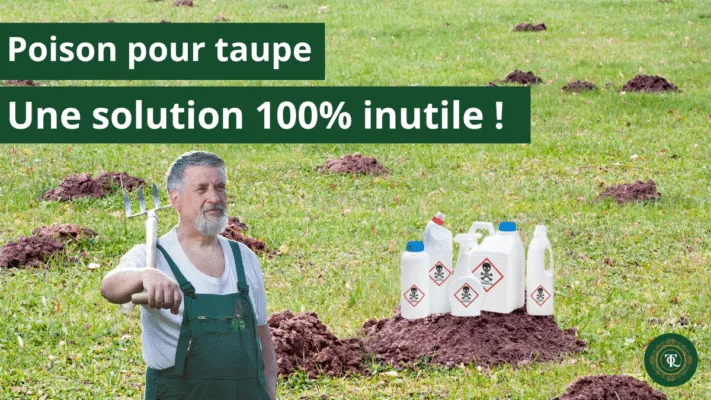
The fact that this trap was used back then and is still used today proves that it’s the most effective way to catch a mole quickly. So, don’t be fooled by all the miracle products, repellents, and other anti-mole gadgets that don’t work. Make the smart choice.
If you have any questions, feel free to ask us in the comments!
Ready to fight back against moles? Check out our top-sellers!


